
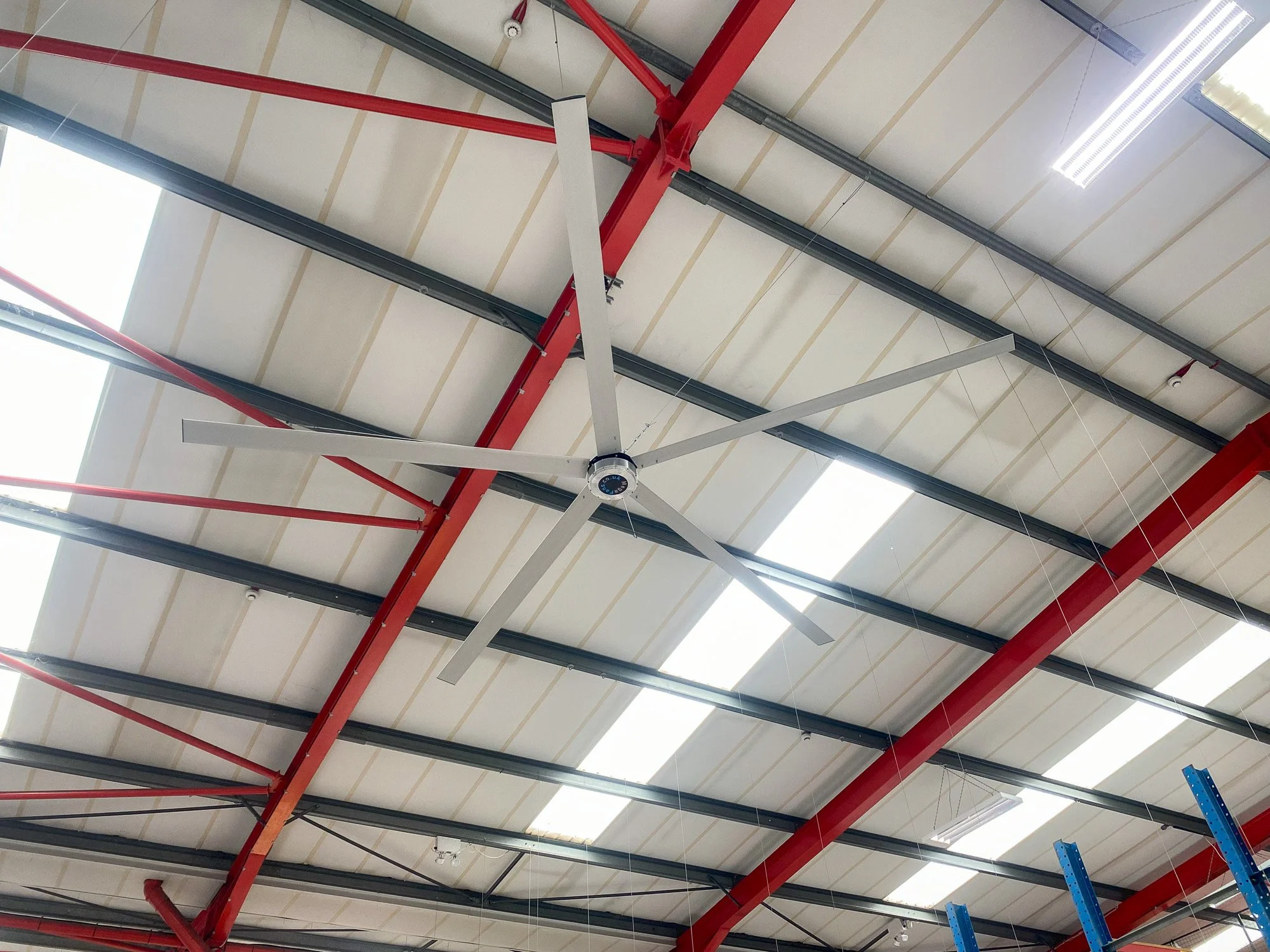
Air That Actually Moves. Comfort That Actually Lasts.
Off Grid Energy & Water's Mega Fan systems recirculate heat in winter, cool naturally in summer, and eliminate the stale, humid air that drives up energy bills — all without a construction project.
One Fan, Three Problems Solved
Off Grid Water combines three proven technologies into modular systems built to be deployed fast and operate independently.
Winter Heat Recovery
Warm air rises and pools at the ceiling — wasted energy you've already paid for. Mega Fan gently pushes it back down to floor level, cutting heating costs by up to 25%.
Summer Cooling, No AC Required
A steady, low-speed airflow creates a felt cooling effect of 4–6°C, reducing the need for mechanical air conditioning by up to 20% — without the running cost of a compressor.
Air Quality & Condensation Control
Stagnant air breeds moisture, mould, and odour. Continuous air movement keeps humidity even and reduces condensation on ceilings, walls, and stored goods.
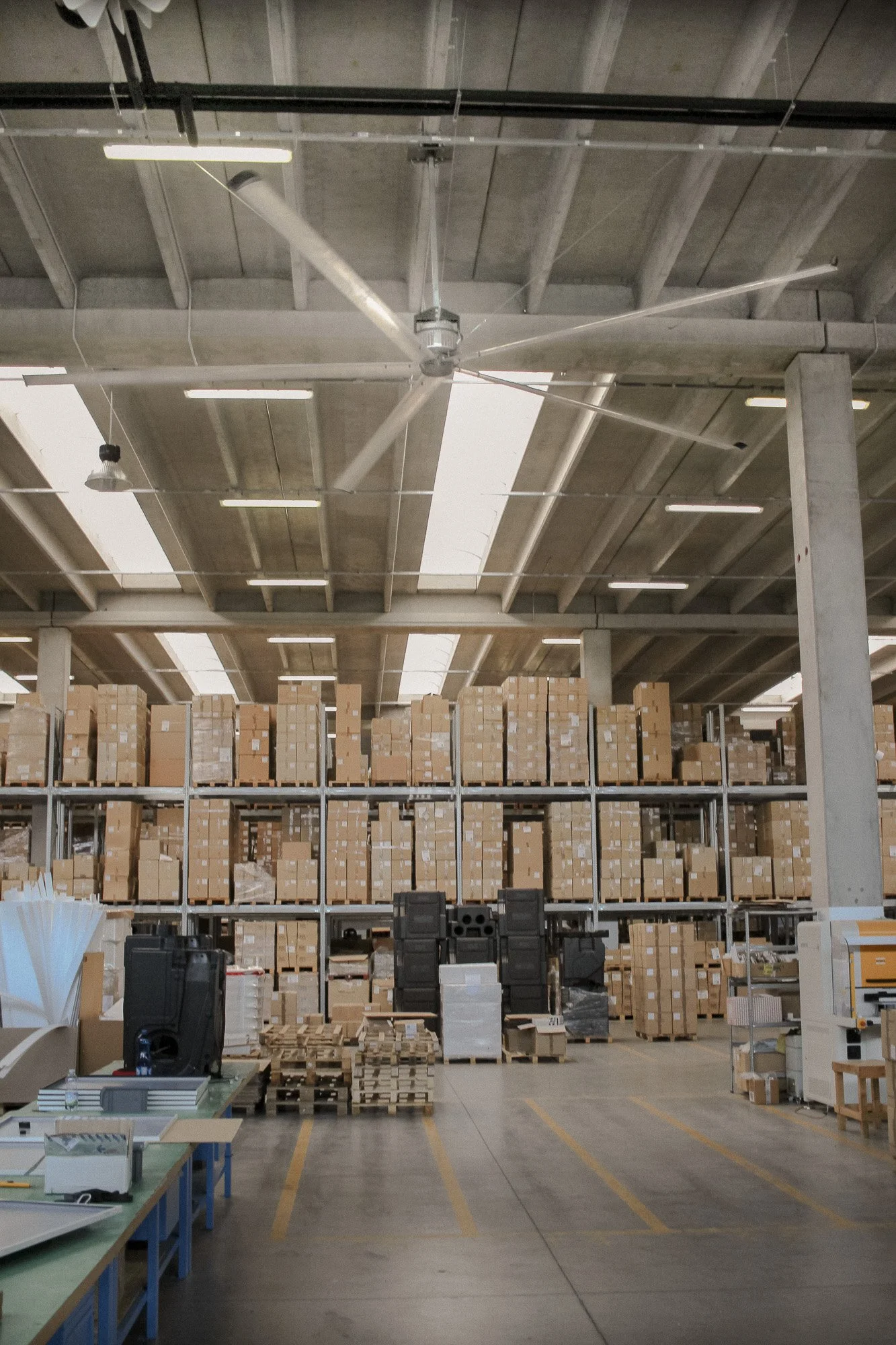
Built For Spaces Where Air Stands Still
High ceilings and large open floors are efficient to build and expensive to heat or cool — the air has nowhere to go, so it simply layers and sits. Mega Fan is engineered for exactly this problem: warehouses and distribution centres, manufacturing halls and workshops, sports arenas and swimming halls, and public and commercial buildings with large open volumes. Diameters from 2.4m to 7.3m are matched to the space, not the other way around — smaller facilities don't need to over-invest in capacity they'll never use.
Why Facility Managers Choose Mega Fan
Typical installations pay for themselves in around 3 years through reduced heating and cooling costs — after that, the savings go straight to the bottom line.
Fast Payback
Mega Fan mounts to existing ceiling structures. No new ductwork, no downtime, no disruption to daily operations — installation is measured in days, not months.
No Construction Project
Rated for over 60,000 hours of operation, with a direct-drive design that avoids the belts and gearboxes that typically fail first in industrial fans
Built To Run For Decades
Delivered and supported in Norway through our partnership with EDA Elektro Data AS for electrical integration and MOTEK AS for structural mounting — not a fan shipped in a box with no one to call.
Local Engineering & Support
Mega Fan Technology In Detail
Every installation is sized to the room, not sold off a shelf. A typical 5-metre Mega Fan unit illustrates the scale involved:
Optimal Conditions / Specifications
Airflow: 250,000–350,000 m³/h
Effective coverage: 800–1,200 m²
Rotation speed: 25–40 RPM
Noise level: 35–45 dB
Rated lifespan: 60,000+ hours
AirSlim — Power: 0.24–1 kW · Diameter: 2.4–7.3 m · Weight: 26–93 kg · Indoor
Airmax — Power: 0.9–1.1 kW · Diameter: 4–7.3 m · Weight: 91–139 kg · Indoor & outdoor
Up to 25% lower heating costs in winter
4–6°C felt cooling effect in summer
Up to 20% reduction in cooling/AC demand
~3 years typical payback period
Stats
Mega Fan systems can be integrated into your building's existing management system (BMS) through automated network control, with scheduling and speed profiles tailored to your building's actual usage patterns — no manual adjustment required.
Digital control
Applications For HVLS Fans
HVLS fans are particularly well-suited for buildings with high ceilings and a need for efficient air distribution. Typical applications include:
Sports halls and gymnasiums
Fitness centers and climbing halls
Swimming pools and indoor arenas
Riding halls
Sports and Leisure:
Production facilities
Warehouses and logistics terminals
Workshops and mechanical factories
Agricultural buildings (stables, barns, and greenhouses)
Underground facilities and mountain halls
Data centers and server rooms
Industrial and Commercial:
Shopping centers and department stores
Grocery stores and supermarkets
Car dealerships and showrooms
Conference and exhibition halls
Commercial Buildings:
Public and Institutional Buildings:
Schools and universities
Cultural centers and libraries
Churches
Airports, hangars, and train workshops
Hospitals and health institutions (technical rooms and storage areas)
Frequently Asked Questions
-
Mega Fan units move far larger volumes of air at very low rotation speeds (25–40 RPM), which is what makes them quiet, energy-efficient, and effective across a much larger floor area than a standard fan.
-
Both. By pushing warm air that's collected at the ceiling back down to occupied level, Mega Fan directly reduces how much your heating system needs to run — typical savings are up to 25% in winter.
-
For many facilities, no — the felt cooling effect of 4–6°C is enough on its own. For spaces that already have AC, Mega Fan reduces how much it needs to run, cutting cooling costs by up to 20%.
-
Mega Fan mounts to your existing ceiling structure. There's no construction project, no ductwork, and installation is typically completed in days without stopping normal operations.
-
It depends on ceiling height, floor area, and how the space is used. We size every installation individually — a site assessment is the fastest way to get an accurate recommendation.
-
Mega Fan can be integrated into your building's management system (BMS) with automated scheduling and speed control, so it runs on its own based on your building's actual conditions.
-
The direct-drive design is rated for 60,000+ hours of operation — significantly longer than fans relying on belts or gearboxes, which tend to be the first components to fail.
-
Off Grid Energy & Water delivers Mega Fan locally, with electrical integration handled by our partner EDA Elektro Data AS and structural mounting by MOTEK AS.
Stop Paying To Heat And Cool Air You're Not Using
A short site assessment tells you exactly what Mega Fan would save on your specific building — no obligation, no guesswork.